Diminishing Returns at the Long Table: An Inquiry Into the Tasting Menu's Future
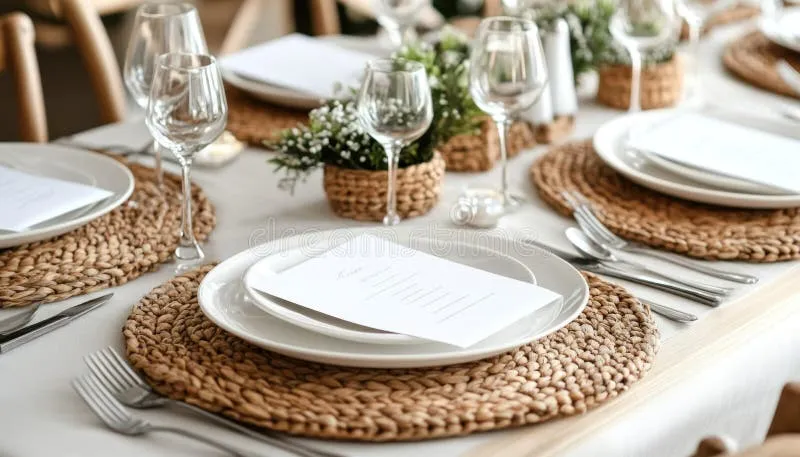
Photo: elegant tasting menu plates fine dining restaurant table setting, via thumbs.dreamstime.com
There is a number that haunts the current conversation in American gastronomy: $495. It is the price of admission at a growing roster of the country's most celebrated restaurants, before tax, before the pairing, before the inevitable supplement. For that sum, a diner receives roughly a dozen courses across four hours — an evening that demands both a generous wallet and a certain physical stamina.
The question now being asked, quietly in some quarters and bluntly in others, is whether this format can survive. The evidence of strain is suggestive if not yet conclusive. Reservation books at several marquee rooms, once impenetrable, have developed visible gaps. Cancellation rates have climbed. And a certain fatigue — call it tasting-menu exhaustion — has become a recurring theme among the dining public.
The Economics of Extravagance
An economist's reading of the format is not flattering. The tasting menu, at its current scale, is an expensive proposition to deliver: high labor intensity, elaborate inventories, and a seating capacity limited by the length of the experience itself. Two seatings a night is the ceiling for a four-hour menu. Restaurants cannot raise volume, so they raise price — and each increase narrows the audience.
What the format loses in breadth it is supposed to gain in margin, and for a period it did. The post-pandemic surge in celebratory spending, the so-called revenge dining of 2021 and 2022, kept the books full. That wave has receded. What remains is a product priced for a boom, sold into a more cautious market.
The Chefs Are Not Unaware
Ask chefs, and few will defend the twelve-course format as immutable. Many speak of it as a habit inherited from the European canon rather than a conviction. Several of the country's most interesting kitchens have already responded: menus trimmed to seven or eight courses, prices pulled back under $200, à la carte dining rooms opened alongside the counter. Others have inverted the equation entirely, offering a shorter, denser experience at a premium — fewer courses, higher stakes, a tighter argument.
The diners interviewed for this piece split into revealing camps. Some insist the splurge is precisely the point, that haute cuisine should be rare and costly and that the format's difficulties are the market correcting an overshoot rather than abandoning an idea. Others describe the long menu as an ordeal they feel obligated to admire — a performance of connoisseurship they would happily trade for three perfect dishes and an earlier bedtime.
What Survives the Correction
The likeliest outcome is not extinction but diversification. The monolithic tasting menu — the same length, the same arc, the same price for every table — will probably remain the province of a handful of destination restaurants that can fill seats on reputation alone. Around them, the landscape will fragment: short menus, hybrid formats, à la carte rooms of genuine ambition, and counter experiences built around a single idea executed exhaustively.
This would be, on balance, healthy. The tasting menu was never the definition of fine dining, merely its dominant delivery mechanism of the past two decades. Formats that force restaurants to compete on clarity rather than accumulation — on the quality of the argument rather than the number of its paragraphs — tend to produce better cooking.
The $495 question, then, is less about whether the bubble will pop than about what the market is learning to value. If the answer is attention, precision, and a reasonable hour of departure, the next decade of American haute cuisine may be its most interesting yet.