Sweetness, Subverted: Inside the Pastry Station Where American Fine Dining Takes Its Greatest Risks
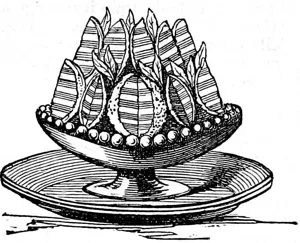
Photo: Eliza Acton, Public domain, via Wikimedia Commons
For decades, the pastry station occupied a peculiar position in the professional kitchen: essential, isolated, and quietly condescended to. Its practitioners worked separate hours, answered to a different lineage, and were expected to close the meal with something sweet, familiar, and above all safe. Innovation, when it happened, happened up front, among the savories.
No longer. Visit the most ambitious kitchens in America today and you will find the greatest appetite for risk at the pass's far end. The pastry chef — long the most siloed figure in the brigade — has become fine dining's most reliable provocateur.
The Savory Infiltration
The clearest signal of the shift is the migration of savory ingredients into the final course. Not as novelty, but as architecture. A dessert built on roasted parsnip and brown butter. A finale of cultured cream, buckwheat, and a thread of olive oil. Vegetables, broths, ferments, and even smoke — the vocabulary of the savory kitchen — now constitute the standard palette of the American pastry section.
The reasoning is straightforward once stated: the diner arrives at the last course having consumed a dozen iterations of richness, salt, and umami. Sugar at full volume is a wall; the best pastry chefs have learned to work in shadows, deploying sweetness as an accent rather than a thesis.
Five Ways the Station Is Rewriting the Rules
1. Sugar as seasoning, not foundation. The leading pastry programs now treat sucrose the way savory kitchens treat salt — a tool for balance, dosed precisely, never dominant. Desserts arrive tasting of their primary ingredient first.
2. Savory technique, sweet application. Fermentation, curing, and char — once strictly the savory brigade's domain — appear throughout the dessert section. A fermented fruit, a charred meringue, a miso caramel: the crossings are now routine, and the results frequently outshine the courses that precede them.
3. Non-sweet finales. A growing number of tasting menus conclude with something that cannot be called dessert at all: a sip of broth, a bite of bread and cultured butter, a cheese course reimagined as confection. The gesture risks preciousness; at its best, it lands as a genuine surprise.
4. Architecture without the crutch. With sugar de-emphasized, structural technique has had to advance. Hydrocolloids, frozen foams, and precision-baked lattices carry textures that sugar's binding power once provided — engineering in service of flavor rather than spectacle.
5. The station as R&D lab. Perhaps most significantly, pastry's traditional isolation has become an asset. Freed from the spotlight that falls on the savory kitchen, pastry chefs experiment with a latitude their colleagues on the line rarely enjoy. Several of the most talked-about techniques in contemporary American cooking crossed over from the dessert section first.
The Case for the Quiet Revolution
There is a temptation to read all this as contrarianism — sweetness abandoned for its own sake. The better reading is that pastry chefs, having spent years watching the savory kitchen absorb every innovation and every headline, simply stopped waiting for permission. They borrowed the tools, inverted the assumptions, and built a discipline that is now, by any honest measure, the most adventurous corner of American fine dining.
The last course, it turns out, was never the epilogue. It was the avant-garde, waiting patiently at the end of the menu for the rest of the kitchen to catch up.