Edible Geography: How America's Finest Chefs Are Turning Provenance Into a Philosophy
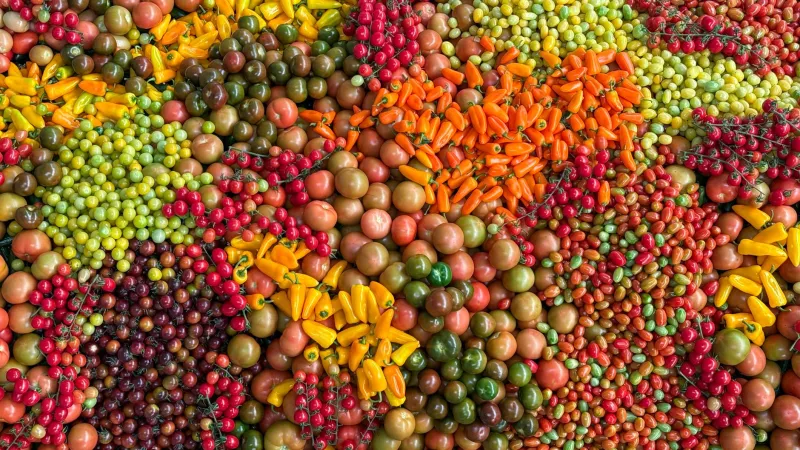
There is a moment, familiar to any serious diner who has sat before a tasting menu at one of America's more philosophically ambitious restaurants, when a single bite stops the conversation entirely. Not because of technical virtuosity alone, but because something in the flavor announces a place — a specific hillside, a particular estuary, a strain of grain that has not been grown commercially for a century. It is the taste of somewhere, rendered with the precision of a scholar and the conviction of an artist.
This is the frontier of American fine dining in the present decade: not farm-to-table as a marketing posture, but provenance as an epistemology. The question these chefs are asking is no longer simply where did this come from? but what does this place mean, and how do we eat it?
Beyond the Buzzword
The farm-to-table movement, whatever its considerable merits, accumulated a kind of rhetorical inflation over the years. Menus announced local sourcing with the same breathless enthusiasm once reserved for truffles and foie gras. The proximity of the farm to the kitchen became a selling point in itself, regardless of whether that proximity produced anything culinarily distinctive.
What has emerged in its wake is more demanding — and more interesting. A cohort of chefs at the upper echelon of American cuisine has begun treating ingredient provenance with something approaching archaeological discipline. They are not content to know the name of a farm; they want to understand its soil composition, its elevation, its relationship to watershed and weather, the cultivar history of what it grows. They are, in effect, building a terroir-based cuisine in a country that has not always had the vocabulary — or the patience — for such a project.
The concept of terroir, long the intellectual property of French viticulture, describes the complex environmental conditions that give a wine its particular character: the mineral content of the soil, the angle of the sun, the drainage patterns of a slope. Applied to food, it demands an equivalent seriousness — the recognition that a Charentais melon grown in the limestone soils of the Hudson Valley is not the same fruit as one grown in the clay of the Willamette Valley, and that this difference is not incidental but essential.
The Cartographers of the Kitchen
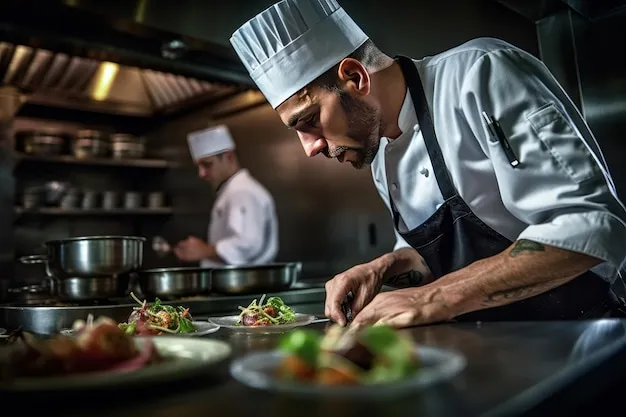
At restaurants like Quince in San Francisco, the sourcing network extends not merely to certified organic producers but to specific plots within those farms, tracked season by season for the ways a given year's rainfall or temperature variance alters the flavor profile of a vegetable. The kitchen functions, in part, as a laboratory of place — a space where the dining room becomes a kind of sensory atlas.
In the South, chefs such as Sean Brock have spent years reconstructing the agricultural heritage of the Carolina Lowcountry with a rigor that would not be out of place in an academic archive. The revival of heirloom grain varieties — particularly the Sea Island red peas and Carolina Gold rice that once defined the region's culinary identity — is not nostalgia but archaeology. These ingredients carry within them a history of land, labor, and culture that no contemporary hybrid can replicate. To place them on the table is to make an argument about memory.
In the Pacific Northwest, a similar project unfolds through foraged ingredients and indigenous cultivars. Chefs working in Seattle and Portland have developed relationships with tribal land stewards and independent foragers that give their menus an intimacy with the specific ecology of the Cascades and the Olympic Peninsula that a conventional supply chain could never approximate. The camas bulb, the stinging nettle harvested from a particular river valley, the chanterelle that appears only after the first autumn rains on a specific ridge — these are not interchangeable with their commercial equivalents. They are, to borrow a phrase from the wine world, site-specific.
The Menu as Manuscript
What distinguishes the most accomplished practitioners of this philosophy is not merely the sourcing but the communication of it. A menu that lists a farm name fulfills a disclosure obligation. A menu that explains the microclimate of a particular valley, the reason a heritage breed of cattle produces a fat with a specific golden hue at a specific altitude, the century-old rootstock from which a particular apple descends — that menu is doing something different. It is functioning as a form of cultural education.
This is a significant evolution in the rhetoric of American fine dining. For much of the twentieth century, the prestige menu was a document of technique and luxury: the classical preparations, the imported ingredients, the names of French masters invoked as pedigree. The contemporary provenance-focused menu inverts this hierarchy. The luxury is not in the distance the ingredient has traveled but in the depth of knowledge surrounding its origin. The prestige is intellectual as much as material.
Some critics have questioned whether this represents a genuine democratization of culinary culture or merely a more sophisticated form of elitism — the connoisseur's pleasure in arcane knowledge transferred from the wine cellar to the dining room. It is a fair challenge. A tasting menu built around a single-origin heritage grain grown on a family farm in the Palouse requires both a substantial financial commitment from the diner and a considerable willingness to engage with information that many guests may find more overwhelming than illuminating.
Place as Argument
And yet there is something genuinely important in what these chefs are attempting. American cuisine has long struggled with the question of identity — a country without the centuries of codified regional tradition that anchor French, Italian, or Japanese cooking has often defaulted to either imitation or eclecticism. The terroir-based approach offers a third path: the construction of identity from the land itself, from the specific and unrepeatable conditions of a particular American place.
When a chef in coastal Maine builds an entire autumn menu around the ecology of a single tidal estuary — the kelp, the urchin, the cold-water bivalves that filter that specific body of water — the result is not merely a collection of local ingredients. It is a statement about what Maine is, expressed in the most direct and visceral language available to a human being: the language of taste.
Apicius, the legendary Roman epicure for whom this publication is named, understood that the highest form of gastronomy was never merely about pleasure. It was about knowledge — about understanding the natural world through the act of eating it with attention. The chefs who are mapping American terroir with such precision are his inheritors in ways they may not always recognize. They are making the case, one carefully sourced plate at a time, that to eat with full consciousness of a place is to know it in a manner that no other discipline can quite replicate.
That is not a modest ambition. It is, however, a worthy one.