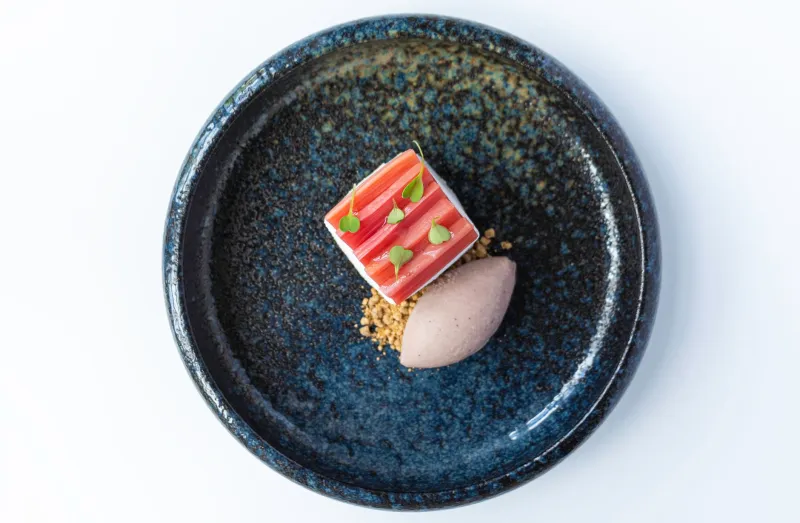
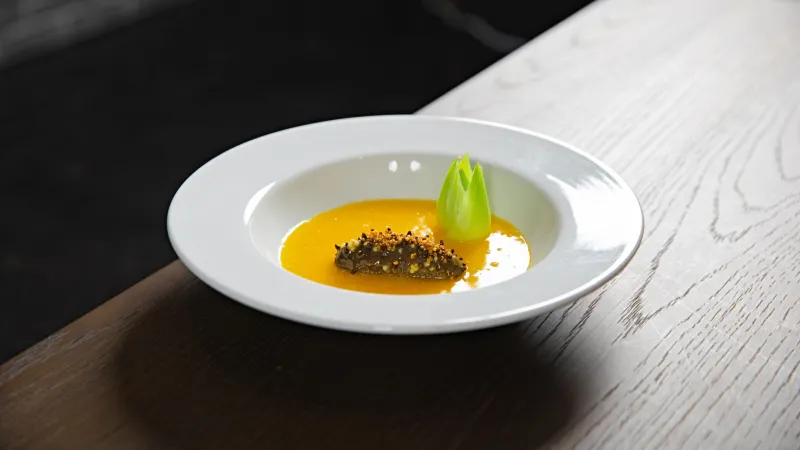
The Discipline of the Essential: How America's Most Exacting Chefs Are Finding Profound Complexity in Deliberate Scarcity
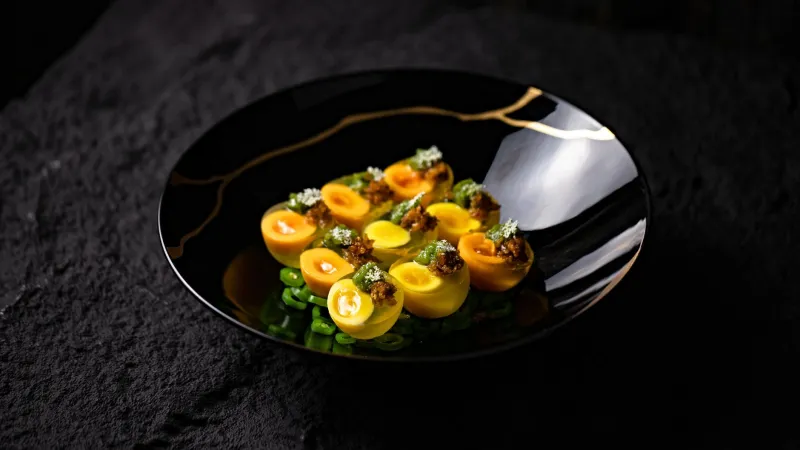
There is a particular kind of courage required to serve a dish composed of three ingredients. It is the courage of exposure — the willingness to place nothing between the diner and the truth of one's craft. In an era when the American fine dining landscape has oscillated between maximalist spectacle and studied restraint, a distinct cohort of chefs is now staking its reputation on the latter with unusual conviction. These are not cooks who lack imagination; they are practitioners who have concluded that imagination is most powerfully expressed through what is withheld.
Apicius himself, the legendary Roman epicure whose name this publication bears, understood that true gastronomic authority was never simply a matter of accumulation. His legacy endures not because he catalogued excess, but because he understood proportion — the relationship between element and intention. It is this ancient wisdom that America's most sophisticated kitchens appear to be quietly rediscovering.
A Philosophy Born of Rigor, Not Poverty
To speak of culinary essentialism is to risk mischaracterization. The instinct, particularly within American food culture, is to read scarcity as privation — to assume that a spare plate is a lesser one. The chefs operating within this emerging doctrine are at considerable pains to correct that assumption.
At its philosophical core, the doctrine of the essential rests on a single demanding premise: that every ingredient present on a plate must justify its existence not merely through flavor, but through necessity. If an element can be removed without diminishing the dish, it should be. What remains after this ruthless editorial process is not a reduced creation but a concentrated one — a distillation in which each component carries the full weight of the whole.
Chef Blaine Wetzel of The Willows Inn on Lummi Island in Washington State has long exemplified this approach, constructing menus from ingredients gathered within walking distance of his kitchen, allowing geographical constraint to enforce culinary discipline. The result is not a menu of limitations but one of extraordinary specificity — each dish a precise statement about a particular place at a particular moment.
Similarly, in New York, chefs operating within the tasting menu format have increasingly moved toward what might be described as ingredient portraiture: the sustained, multi-technique examination of a single product across a single course. A turnip, subjected to roasting, fermenting, and raw preparation, becomes not three ingredients but one ingredient understood in three dimensions.
The Technique Beneath the Silence
What distinguishes the essentialist approach from mere simplicity is the extraordinary technical complexity concealed beneath its serene surface. To present a dish of four components with the authority these chefs demand requires a depth of preparation that a more decorated plate might never require. When there is no garnish to distract, no sauce to compensate, no architectural complexity to admire, the ingredient itself must be flawless — and the technique that shaped it must be invisible.
This invisibility is itself a skill of the highest order. In classical French cuisine, technique was often worn openly, a declaration of mastery. The gleaming sauce, the precise brunoise, the perfectly turned vegetable — these were the vocabulary of a kitchen proud of its fluency. The essentialist kitchen speaks a different dialect: one in which the labor is present but unannounced, absorbed entirely into the quality of the result.
Consider the preparation of a single heritage grain — emmer wheat, perhaps, or an heirloom variety of farro sourced from a small farm in the Carolinas. To present this grain as the centerpiece of a course demands that the chef understand its moisture content, its starch structure, its natural sweetness, and the precise point at which heat transforms its texture from resistant to yielding without surrendering its integrity. No additional ingredient can rescue a mishandled grain when the grain is the dish.
The Diner as Active Participant
There is an important dimension to this philosophy that extends beyond the kitchen and into the dining room itself. The essentialist plate makes a particular demand of the diner — one that the maximalist tradition does not. When a dish presents a procession of flavors, textures, and temperatures in rapid succession, the diner is carried along by the composition, guided from sensation to sensation with relatively little effort. The spare dish, by contrast, asks the diner to slow, to attend, to bring genuine curiosity to what appears uncomplicated.
This is, in the finest sense, an act of respect. The chef who composes such a dish trusts the diner to meet it halfway — to recognize that the clean, almost meditative clarity of a perfectly roasted root vegetable, presented with nothing but its own rendered fat and a whisper of aged vinegar, contains as much to contemplate as any elaborate construction. It is a trust that American fine dining audiences, increasingly sophisticated and increasingly weary of performance for its own sake, appear willing to honor.
Restaurants such as SingleThread in Healdsburg, California, have cultivated precisely this kind of attentive dining culture — one in which the pace of service, the simplicity of plating, and the quality of ingredient work together to create an environment in which slowness becomes a form of luxury.
Against the Tyranny of More
The broader cultural context in which this movement has emerged is not incidental. American consumer culture has long been organized around abundance — the premise that more is inherently better, that value is measured in quantity and variety. The fine dining world, for much of its history in this country, absorbed and amplified this premise: larger tasting menus, more elaborate preparations, more ambitious flavor combinations.
The essentialist movement represents a quiet but firm refusal of this logic. It proposes, in its most radical form, that the highest expression of culinary skill is not the ability to combine but the ability to reveal — to strip away everything that obscures the essential nature of an ingredient and present that nature with perfect clarity.
This is, in philosophical terms, a form of phenomenology applied to food: the sustained, disciplined attention to the thing itself, before interpretation and embellishment. It requires of the chef not only technical mastery but a kind of intellectual humility — the willingness to subordinate ego to ingredient, to allow the carrot or the fish or the grain to speak without constant editorial interruption.
An Enduring Discipline
It would be premature to declare essentialism the defining mode of American fine dining for the years ahead. The pendulum of culinary culture swings with reliable unpredictability, and the maximalist impulse has never been entirely absent from even the most restrained of kitchens. What can be said with confidence is that the chefs who have committed to this discipline have produced some of the most intellectually and sensorially compelling dining experiences available in this country today.
For the connoisseur, there is no more demanding pleasure than a plate that offers so little and asks so much. In the silence between ingredients, in the space that a lesser chef would fill with distraction, the essentialist finds the truest expression of what cooking, at its most elevated, has always been: the transformation of the natural world into something at once more fully itself and more fully understood.