The Grammar of the Plate: How America's Most Exacting Chefs Are Turning Visual Composition Into a Prelude to Taste
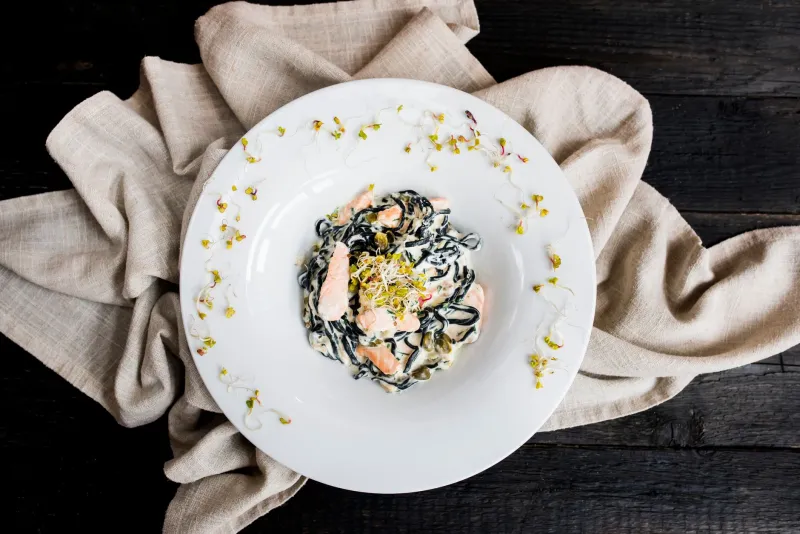
Long before a fork is lifted, a dish has already begun its work. The eye reads, interprets, and anticipates — and in the finest American dining rooms today, that anticipatory moment is no longer left to chance. A cohort of exceptionally deliberate chefs has arrived at a compelling conviction: that the geometry of a plate is not decoration but doctrine, a visual syntax that predicts and shapes the tasting experience that follows.
This is not the ornamental excess of an earlier era, when towers of food and lacquered swooshes of sauce signaled ambition through spectacle. What has emerged in its place is something far more considered — a compositional philosophy that borrows from architecture, color theory, and even linguistics to construct meaning before a single bite is taken.
The Plate as First Sentence
To understand why placement has become so philosophically charged in contemporary haute cuisine, one must first accept the premise that a dish communicates. Just as a well-constructed sentence guides a reader through layers of meaning, a thoughtfully composed plate directs the diner's attention, establishes a hierarchy of flavors, and creates expectations that the tasting will either confirm or productively subvert.
Chefs working at this level describe their plating decisions in terms that would not be unfamiliar to a typographer or a film editor. Tension, balance, rhythm, and emphasis are words that surface repeatedly in their vocabularies. Where an element is placed relative to another — whether it anchors the composition or floats at its periphery — determines which flavor the palate encounters with fresh attention and which arrives as a kind of resolution.
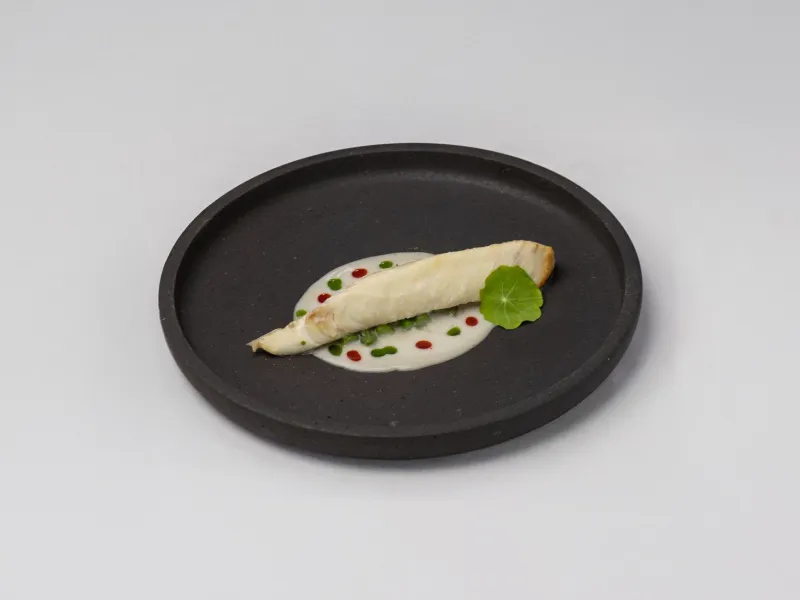
At its most rigorous, this approach treats the white expanse of a plate the way a poet treats silence: as active, meaningful, and irreplaceable. The negative space around a precisely portioned element is not emptiness but emphasis. It instructs the diner where to look, and by extension, where to begin.
Color as Anticipatory Signal
The chromatic dimension of plating carries its own grammar. Research into multisensory perception has long suggested that color influences taste expectation — that a vivid scarlet pool of reduction primes the palate for acidity or sweetness, while deep, saturated earth tones signal richness and weight. Chefs who engage seriously with this body of knowledge are, in effect, writing a flavor preview in pigment.
At several of the country's most decorated restaurants, the color palette of a dish is constructed with the same intentionality as its ingredient list. A chef might deliberately introduce a single chromatic note — the pale jade of a raw herb oil, the burnt sienna of a caramelized allium — not merely for visual interest but to introduce a flavor register into the diner's consciousness before it arrives on the tongue. The eye, in this schema, is the first organ to taste.
What makes this approach sophisticated rather than merely decorative is its restraint. The most accomplished practitioners resist the temptation to crowd a plate with competing hues. A composition of three carefully chosen tones — each purposeful, each earning its place — communicates with far greater clarity than a dozen competing colors jostling for primacy. Discipline, here as elsewhere in haute cuisine, is the truest marker of mastery.
Architecture, Weight, and the Question of Sequence
If color addresses anticipation, architecture addresses sequence. The height, density, and structural logic of a composed dish guide the diner through an implicit order of consumption — a choreography of the meal that the chef has scripted and the diner performs, often without conscious awareness.
A low, horizontal composition invites a broad, sweeping encounter — the palate receives multiple elements simultaneously, and the experience is one of integration. A vertical construction, by contrast, encourages the diner to excavate, to move through layers, discovering new flavor relationships with each descending bite. Neither approach is inherently superior; each serves a different narrative intention.
Some of the most intellectually rigorous chefs working in American fine dining today speak of their plates in terms of movement — a word that initially seems metaphorical but reveals itself as precise. The eye travels across a composition in a sequence determined by visual weight, contrast, and focal points, and the fork tends to follow. A chef who understands this can, with considerable accuracy, predict the order in which flavors will be encountered, and design the plate so that each transition is purposeful rather than arbitrary.
Asymmetry as Argument
Perhaps nothing distinguishes contemporary compositional philosophy from the classical symmetry of an earlier tradition more clearly than the embrace of deliberate asymmetry. Where the formal European plating canon often sought balance through mirroring — equal portions flanking a central element — many of today's most forward-thinking American chefs have found that asymmetry generates a productive tension that symmetry forecloses.
An off-center placement creates a visual question that the composition then answers. It introduces a sense of movement, of incompleteness that the tasting resolves. There is a psychological dimension to this: asymmetrical compositions have been shown to engage the viewer's attention more actively, prompting a kind of searching quality that mirrors the intellectual engagement these chefs wish to inspire in their guests.
This is not asymmetry for its own sake — carelessness masquerading as philosophy. The distinction lies in whether the imbalance is felt as intentional. When it is, the diner senses that they are in the presence of a considered argument, not an accident. The plate becomes, in that moment, a form of rhetoric.
The Diner as Reader
Underlying all of these compositional strategies is a reconception of the diner's role. The chef who treats plating as a language implicitly positions the guest as a reader — someone whose perceptual faculties are engaged before the first taste, whose expectations are shaped and guided by visual cues, and whose final experience of flavor is inseparable from the visual narrative that preceded it.
This is a significant elevation of the dining experience, and it carries with it a corresponding responsibility. A plate that promises through its composition and then fails to deliver in flavor is a broken promise — a mismatch between visual rhetoric and gustatory reality that the discerning diner will register as a fundamental dishonesty. The most accomplished practitioners of this philosophy understand that composition and cuisine must be in complete accord, each amplifying and fulfilling the other.
In this sense, the finest plated dishes in American haute cuisine today function as complete aesthetic statements — objects in which form and content are inseparable, where the arrangement is the argument and the tasting is its proof. For the connoisseur who arrives at such a table, the meal begins the moment the plate is set before them, and the first act of dining is, quietly and entirely, an act of reading.