The Patience of Transformation: How America's Finest Chefs Are Elevating Fermentation Into a Culinary Doctrine
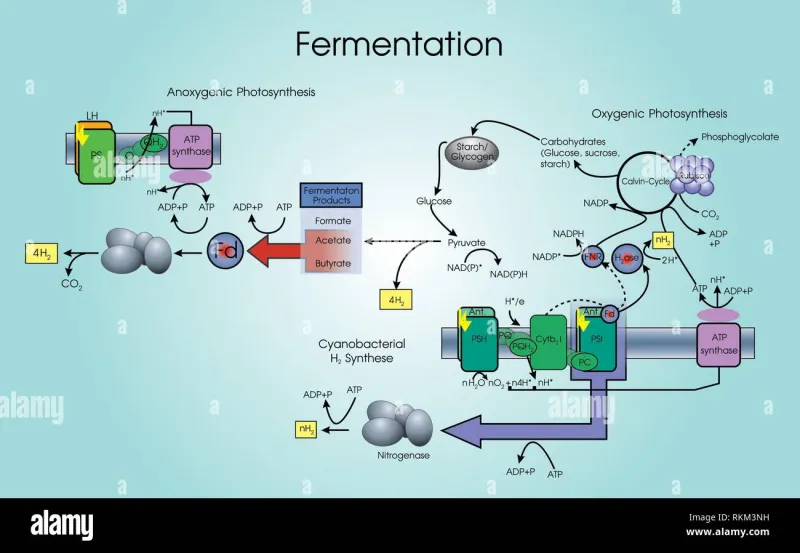
Photo: fermentation jars miso koji fine dining kitchen chef laboratory preservation, via c8.alamy.com
Time, in the contemporary fine dining kitchen, has become an ingredient. Not the compressed time of a rapid infusion or the accelerated reduction of a sauce over high heat, but real, unmanageable time—weeks, months, occasionally years—during which microorganisms enact their slow and irreversible chemistry on carefully chosen raw materials. The results are flavors of a depth and complexity that no amount of technical virtuosity can replicate in an afternoon's service prep, and the chefs who have committed themselves to these processes speak of them with a reverence that borders on the devotional.
Across America's most distinguished kitchens, fermentation and preservation have undergone a fundamental reimagining. Once understood as practical necessities—methods for extending the life of perishable ingredients in an era before refrigeration—they are now understood as philosophical positions: statements about the relationship between cook and ingredient, between kitchen and time, between the immediate and the enduring.
From Technique to Doctrine
The distinction between fermentation as technique and fermentation as philosophy is not merely rhetorical. A kitchen that maintains a miso program, for instance, is making a commitment that extends well beyond the production of a condiment. It is accepting that some of its most important flavor-building work will occur not at the stove but in a temperature-controlled chamber, tended by a living culture that answers to biology rather than to the chef's schedule. It is, in a meaningful sense, a relinquishment of control—and in the high-pressure environment of an ambitious American restaurant, that relinquishment is itself a kind of discipline.
"You cannot rush it," explains the chef de cuisine at a celebrated tasting restaurant in the Hudson Valley, whose fermentation program encompasses house-produced shiro miso, a rotating series of koji-cultured proteins, and an aged mushroom garum that has been in continuous development for nearly three years. "And once you accept that, it changes how you think about everything else in the kitchen. You start to ask: what else am I rushing? What else would benefit from more patience?"
This question—deceptively simple, philosophically rich—has become something of a rallying cry among a cohort of American chefs who see in fermentation not just a set of useful techniques but a corrective to what they regard as the restless, novelty-driven tempo of contemporary haute cuisine.
The Koji Revolution
No single organism has done more to catalyze this movement in American fine dining than Aspergillus oryzae—koji mold—whose extraordinary enzymatic capabilities have made it the subject of near-obsessive study in kitchens from New York to Los Angeles. Koji's ability to break down proteins into free glutamates and complex amino acids makes it, in effect, a biological umami engine, capable of transforming a piece of beef, a fillet of fish, or a cob of corn into something of almost ineffable savory depth.
At a Michelin-recognized restaurant in the Pacific Northwest, the kitchen maintains what its chef describes as a "koji library"—a climate-controlled room housing dozens of ongoing cultures applied to ingredients ranging from domestic Wagyu trim to foraged pine nuts. The resulting products—powders, pastes, and liquid extracts—function as seasoning agents of extraordinary complexity, added to dishes in quantities so small as to be invisible, yet capable of altering the entire flavor architecture of a preparation.
"Koji doesn't announce itself," the chef notes. "It just makes everything taste more like itself. That's the goal, ultimately—not to add a flavor, but to reveal what was already there."
This notion of revelation rather than addition is central to the fermentation philosophy as practiced in America's finest kitchens. It is a fundamentally humble approach, one that positions the chef not as a creator imposing flavor upon inert ingredients, but as a custodian guiding a natural process toward its most eloquent expression.
Cultured Dairy and the Refinement of the Commonplace
Beyond koji and miso, the fermentation movement in American fine dining has produced a renewed engagement with cultured dairy that is, in its quiet way, equally radical. House-made crème fraîche, cultured butters, fresh chèvre, and aged fromage blanc have become staples of the contemporary tasting menu not merely because they taste better than their commercial counterparts—though they invariably do—but because they embody the same values of intentionality and provenance that animate the broader fermentation philosophy.
At a celebrated New American restaurant in Charleston, South Carolina, the butter service—a course in itself at many comparable establishments—is built around a house-cultured product made from cream sourced from a single small-scale dairy in the Lowcountry. The butter is aged for varying periods, producing a spectrum of flavors from fresh and milky to deeply tangy and almost cheese-like, and presented to guests with the same contextual narrative that might accompany a selection of artisan cheeses. The message is unmistakable: this is not a condiment. This is a dish.
Broths, Garums, and the Long Game
Perhaps the most dramatic expression of fermentation's ascendancy in fine American dining is the proliferation of aged broths and fish-sauce-style garums in kitchens that would once have considered such preparations the province of industrial food production. Inspired in part by the Nordic fermentation movement—René Redzepi's Noma fermentation laboratory in Copenhagen cast a long shadow across the Atlantic—American chefs have embraced the garum tradition with particular enthusiasm, applying its principles to ingredients as varied as beef, chicken, black truffle, and even spent coffee grounds.
The results are liquids of extraordinary potency and complexity—a few drops capable of transforming a sauce, a glaze, or a vinaigrette in ways that hours of conventional cooking cannot. More importantly, they represent a form of institutional memory: a kitchen that maintains a garum program is, in a literal sense, cooking with the accumulated labor of months past, drawing on a history that is embedded in the flavor itself.
Restraint as the Highest Expression
What unites these varied practices—koji culture, miso production, cultured dairy, aged broths—is not merely their shared reliance on microbial activity but the temperamental disposition they require of the cook. Fermentation demands patience, observation, and a willingness to accept outcomes that are influenced but never entirely controlled. It demands, in short, the same qualities that distinguish the finest dining from the merely competent: a commitment to excellence that is prepared to take the long view.
In this sense, the fermentation movement in American fine dining is less a trend than a reorientation—a collective decision, made by some of the country's most gifted culinary minds, to measure greatness not in the speed of execution but in the depth of understanding. The Roman gourmet Apicius, who devoted his considerable resources to the pursuit of flavors that could not be obtained by ordinary means, would have recognized the impulse immediately. The finest things, he understood, are rarely those that arrive quickly.