The Virtue of the Flaw: How America's Most Thoughtful Chefs Are Finding Beauty in Imperfection

For the better part of three decades, the grammar of fine dining in America has been written in the language of precision. Tweezers held at exact angles. Sauces poured to the millimeter. Proteins rested, sliced, and arranged with the solemn geometry of architectural drafting. The plate, in this tradition, was a declaration of mastery—a surface upon which no accident was permitted to speak.
That grammar is being rewritten.
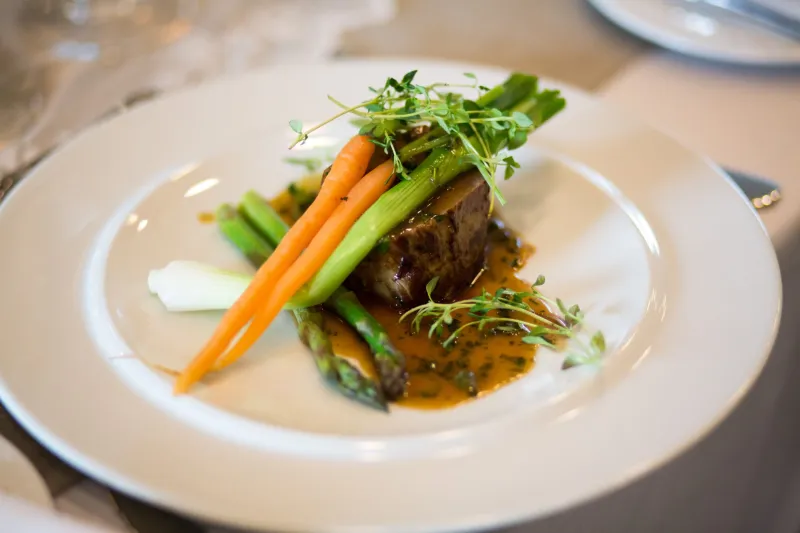
Across the country's most ambitious tables, a generation of chefs is making a deliberate and philosophically charged argument: that the pursuit of sterile perfection has, over time, drained the plate of its most essential quality. Humanity. In its place, they are introducing what might be called the eloquence of imperfection—visible cracks in lacquered preparations, sauce that runs deliberately to the rim, glazes that pool unevenly, breads that split and char in ways no template could anticipate. These are not mistakes. They are, their makers insist, the point.
The Problem with the Perfect Plate
To understand why imperfection has become a statement, one must first appreciate the culture it is reacting against. The haute cuisine of the 1990s and early 2000s—shaped in no small part by the influence of classical French technique and the theatrical ambitions of molecular gastronomy—elevated precision to something approaching moral virtue. A dish that arrived at the table looking as though it had been assembled by an instrument rather than a hand was understood to signal seriousness, investment, and control.
But control, pursued relentlessly, produces its own kind of distance. Diners began to feel, even if they could not articulate it, that they were observing a performance rather than participating in a meal. The plate communicated effort, certainly, but not warmth. It showed the chef's authority over ingredients without revealing the struggle—or the joy—of working with them.
Several of America's most closely watched chefs have spoken openly about this tension. The argument, stated plainly, is that a kitchen is a living, pressured, intensely human environment, and that a plate which shows none of that reality is, in a meaningful sense, dishonest. The impeccable composition, however beautiful, can become a kind of fiction.
Wabi-Sabi Arrives at the American Table
The philosophical lineage of this movement is not difficult to trace. Japanese aesthetics—particularly the concept of wabi-sabi, which finds beauty in transience, irregularity, and the marks left by time and use—have long circulated through the world's most forward-thinking culinary conversations. What is newer is the degree to which American chefs are internalizing these principles not as borrowed ornamentation but as genuine conviction.
This is distinct from the rustic-farmhouse aesthetic that swept through American dining a decade ago, when rough-hewn wooden boards and mason jars became shorthand for authenticity. That movement was largely about surface texture and a certain nostalgic informality. What is happening now operates at a deeper level. It is not about making a dish look handmade; it is about allowing the dish to be handmade—to carry the actual evidence of the hands, the heat, and the decisions that produced it.
A caramelized reduction that breaks slightly at its edges. A consommé that clouds, just perceptibly, because it has been fortified beyond convention. A composed dessert whose chocolate element has bloomed faintly, its surface matte and irregular rather than mirror-bright. In each case, the imperfection is not incidental. It is the signature.
The Labor That Shows
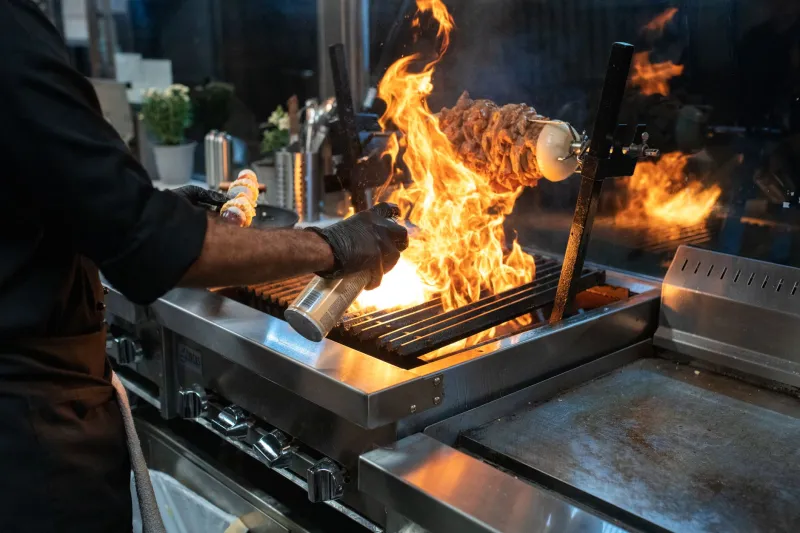
There is a second argument embedded in this philosophy, one that touches on the ethics of hospitality as much as its aesthetics. When a plate reveals the marks of its making—the score of a knife, the uneven distribution of a hand-torn herb, the slight asymmetry of a hand-formed dumpling—it acknowledges the labor that produced it. It makes the kitchen visible in a way that a perfectly composed dish, paradoxically, does not.
This visibility has begun to matter to a certain class of American diner in ways that feel new. There is a growing appetite, among those who eat seriously, for food that does not pretend to be effortless. The effortless plate, however technically demanding its production, communicates ease—and ease, in this cultural moment, can read as indifference. The plate that shows its work, by contrast, communicates care.
Some chefs frame this in almost moral terms. To hide every trace of process, in their view, is to deny the diner a full account of what they are receiving. The flaw, in this reading, is a form of transparency.
Technique Remains the Foundation
It would be a misreading—and a disservice—to interpret this movement as a relaxation of standards. The chefs most committed to visible imperfection are, without exception, among the most technically accomplished in the country. The distinction they are drawing is not between discipline and its absence, but between two different expressions of discipline.
To introduce a deliberate irregularity into a preparation that is otherwise executed with absolute command is itself an act of precision. It requires the chef to know, intimately, what perfection looks like—and then to make a considered departure from it. The flaw must be the right flaw, placed with intention, calibrated to the composition as a whole. Accidental imperfection is merely accident. Intentional imperfection is authorship.
This is, in a sense, the most demanding standard of all. A technically flawless plate can be taught and replicated. A plate that is imperfect in exactly the right way, for exactly the right reasons, requires something that no culinary school can fully transmit: a point of view.
What the Diner Receives
For the guest seated at one of these tables, the experience of this philosophy is often felt before it is understood. There is something in the presence of a dish that has not been perfected into anonymity—something that invites rather than impresses, that opens a conversation rather than closing one.
The crack in the surface of a terrine. The sauce that has moved, slightly, from where it was first placed. The bread that rose unevenly and was not discarded for it. These are the moments when the kitchen and the dining room are briefly, genuinely, in the same room together.
Apicius has long held that the finest table is one that nourishes not only the appetite but the imagination—that a meal, at its most complete, is an act of communication between those who prepare and those who receive. In that light, the embrace of beautiful imperfection is not a retreat from excellence. It is excellence pursued by other, more honest means.
The tyranny of the perfect plate, it turns out, was never really about the food. It was about the fear of being seen. What America's most evolved chefs are doing now, with their deliberate asymmetries and their visible processes, is something quite different: they are choosing to be known.