One Thing, Perfectly: The Singular Obsession Driving Fine Dining's Most Radical Menus
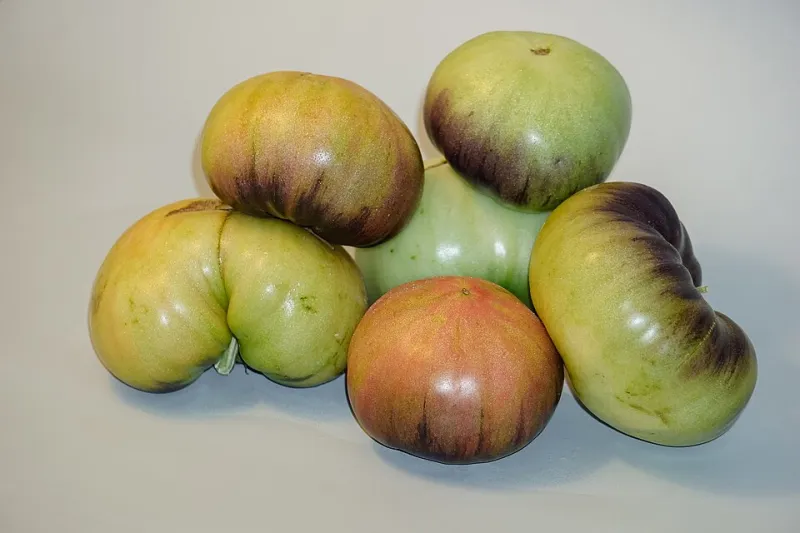
Photo: rajucreddy, CC0, via Wikimedia Commons
Imagine arriving at a celebrated tasting table to find that every course—from the first amuse-bouche to the final petit four—draws its identity from a single ingredient. Not a protein, not a season, but one specific product: a tomato, a particular variety of milk, a single cultivar of corn. Across America's most intellectually ambitious restaurants, this austere constraint has become the highest expression of culinary philosophy. To cook with only one thing is, paradoxically, to reveal everything.
The Monograph as Menu
In academic scholarship, a monograph is a work devoted to a single subject in exhaustive depth—a sustained inquiry rather than a survey. The term has found an unlikely home in contemporary gastronomy, where a small but influential cohort of American chefs has begun constructing tasting menus that function according to precisely this principle: one subject, examined with the rigor and patience of a scholar who intends to leave nothing unexamined.
The practical execution of this philosophy varies considerably. At a destination restaurant in the Hudson Valley, a summer menu built entirely around the Brandywine tomato spans twelve courses—each one isolating a different quality of the fruit. A first course offers the tomato raw, cured only in its own liquid, with nothing added, so that the diner may establish a baseline understanding before the transformations begin. Subsequent courses introduce heat, acid, fermentation, reduction, and dehydration in deliberate sequence, each preparation designed to illuminate one facet of the ingredient's character while building upon what preceded it.
The effect, according to those who have experienced it, is less like eating a meal than attending a lecture in which every sentence arrives in a different form.
The Logic of Limitation
The philosophical underpinning of this approach owes something to the concept of terroir—that quality of place, climate, and cultivar that distinguishes one product from another and makes provenance a matter of flavor rather than mere geography. To devote an entire menu to a single ingredient is to argue, implicitly, that this ingredient possesses sufficient depth and complexity to sustain extended contemplation. It is, in other words, a statement about value.
Chef Blaine Wetzel of The Willows Inn on Lummi Island in Washington State has long practiced a version of this philosophy, building menus around the hyperlocal products of the island's immediate environment. While his approach is not always limited to a single ingredient, the underlying logic is congruent: the menu as an argument for specificity, as a case made on behalf of a particular place and a particular moment within it.
Elsewhere, the single-ingredient format has been applied with even greater severity. A Chicago restaurant known for its intellectual rigor has offered a milk-centric tasting menu that traces the transformation of a single dairy product through raw consumption, cultured preparations, cooked applications, and aged expressions—effectively presenting the entire history of human dairy culture as a sequence of courses. The exercise is not merely technical; it is, as the chef describes it, "an act of respect for a substance that civilization has depended upon for millennia."
The Tomato, the Corn, the Egg
Certain ingredients have proven particularly well-suited to this treatment. The tomato, with its extraordinary range of acidic, sweet, savory, and umami qualities, offers a chef almost limitless preparation possibilities. Heirloom varieties introduce an additional layer of complexity: a menu devoted to the Green Zebra will yield fundamentally different results than one built around the San Marzano, even when the technique is identical.
Corn, particularly in the hands of chefs working with indigenous American culinary traditions, has emerged as another compelling vehicle for the single-ingredient format. The range of preparations available—nixtamalization, fermentation, roasting, milling, fresh preparation—mirrors the extraordinary diversity of corn's cultural significance across the Americas. A menu devoted to a single heirloom corn variety becomes, in this context, as much an act of historical recovery as it is a culinary exercise.
The egg, meanwhile, occupies a peculiar position in this taxonomy. Technically a single ingredient, it is also a culinary universe unto itself—its whites and yolks behaving according to different rules, its capacity for transformation seemingly inexhaustible. Several ambitious American restaurants have built tasting menus around the egg with results that range from the playful to the genuinely revelatory, each course challenging the diner to reconsider what they believed they already knew about the most familiar object in the kitchen.
Constraint as Creativity
The counterintuitive truth at the heart of the single-ingredient menu is that limitation, rather than restricting creativity, appears to intensify it. When the range of available subjects is reduced to one, the chef's attention is forced inward—toward depth rather than breadth, toward nuance rather than novelty. Every decision about preparation, temperature, texture, and accompaniment must be justified not against a general standard of deliciousness but against the specific question of what this particular treatment reveals about this particular ingredient.
This is demanding work. The chef who constructs a twelve-course tomato menu cannot rely on contrast between disparate flavors to carry the diner through the meal; she must build momentum through a sequence of discoveries, each one making the next feel both surprising and inevitable.
The results, at their finest, constitute a genuinely new form of culinary argument—one that treats the ingredient not as a vehicle for technique but as a subject worthy of sustained intellectual and sensory engagement.
The Diner's Obligation
It would be remiss to discuss the single-ingredient menu without acknowledging the demands it places upon the guest. To sit through twelve courses devoted to a single product requires a particular quality of attention—a willingness to arrive without preconception and to follow the chef's reasoning wherever it leads, even when the destination is unexpected.
This is, in the most precise sense, the experience that Apicius was designed to address: the meeting of an exceptionally prepared mind with an exceptionally prepared table. The single-ingredient menu, at its best, is not a curiosity or a conceptual exercise. It is an invitation to know one thing—truly, deeply, completely—in the time it takes to finish a meal.